Followers

Wednesday, February 1, 2012

Elephant captive breeding history and Hall of fame

The elephants were never domesticated, and although captive breeding for sure occured, before and during medevial time, this was ocassionally, by random matings, and probably never leading to a second generation.
The reason, especially in Asia, was simple: it was much easier to catch wild elephants in the forest, and tame and train them, than trying to breed them. Maybe Asian mahouts during medevial times, already then found out, that captive born elephants becomes much more dangerous and aggressive, than wild caught elephants, a fact that obviously still until today is unknown by most laymen, and also many people within the Zoological community. Another reason was that the elephants were used for war or work, why it was more effective to catch semiadult, or adult elephants. Some Indian states actually had written laws, prohibiting capture of elephants younger than 20 years. Investing time, food, and recources in elephant babies was uncommon.
Therefore, Asia had no traditions of captive breeding, and the first recorded babies born in Asia is from the 18 century. The northern african elephant, Loxodonta pharaoensis, (now extinct) which was captured and used for roman time wars by Carthago and Rome, was probably not bred in any remarkable numbers, although some records indicate elephant births on the Compagna outside Rome City.

In the book Modoc: The True Story of the Greatest Elephant That Ever Lived, the author Ralph Helfer tells about Modoc the elephant born in Germany in 1900 to Mr. Joseph and Katrina Guntertine, which is all false, its no true story at all, no such elephant were born at that time in Germany, no german elephant keeper ever stranded with his elephant in India, and according to elephant and circus historian William "Buckles" Woodcock, Helfer mixed up three different wildborn Modocs which all were kept at Ringling Brotters and Barnum and Baileys Circus in USA:
  1. http://www.elephant.se/database2.php?elephant_id=2382
  2. http://www.elephant.se/database2.php?elephant_id=2383
  3. http://www.elephant.se/database2.php?elephant_id=2006
With this falsery, Ralph Helfer even managed to bring this fictional elephant Modoc, being merged from three different Modocs, into the Guiness books of records, as the oldest elephant recorded, from which I believe, it is now removed. If not, it should be.

The first documented 10 captive born elephants

The first documented captive bred elephants in the western hemisphere were indeed born on circuses.In those times very few zoos kept bulls, but the circuses did, with lethal consequences for the elephant trainers.

1. The very first The first documented birth of a captive asian elephant outside Asia, was the male Joe born 31st May 1875 at Howes Great London Circus (he died shortly afterwords)


Babe and Columbia 1880 at the Cooper & Bailey winter quarters in Philadelphia.
2. The second was the female Columbia born 3rd October 1880 on Cooper & Bailey Circus who was 27 seven years on her death 1907. Although her mother, Hebe, commonly known about the show as Babe, was one of the best-natured elephants I ever knew, the daughter grew meaner and meaner as she got older, until in 1905 or 1906 she had to be killed. Mr. Bates, who was assistant superintendent of elephants for a long period of years, told me she inherited her vicious disposition from her sire.
W. Henry Sheak, The Elephant in Captivity, Natural History, September-October 1922


The father of the those first two babies, Mandarin, was killed and sent to the bottom of New York Harbour in 1902, on Barnum and Baileys retour to the U.S. from the european tour.

3. The third baby was Bridgeport born 1882 at Barnum and Bailey Circus, She was burned up in the fire in 1886 that destroyed much of the splendid menagerie of Barnum and Bailey.The father, Chieftain, was killed in 1888 by strangulation, he was choked to death by two bull elephants Basil and Bismarck

4. Ringling Bros Circus had a baby born named Ned (Nick)  in 1900. His mother Alice did not take care of her son, and was Ned was bottlefed, but with less results, he died three months old. He was the first birth on the Ringling Brothers Circus.

5. The first elephant born in a Zoo, was a stillborn calf born 1902 in London Zoo, but it was bred on Circus Sanger.

6. The same year, 1902, an elephant was born on Ringling brothers Circus, which was killed by the mother.

Phua Victoria Portena with her mother Nayan, Buenos Aires Zoo 1905
7. In Buenos Aires Zoo, Argentina, the worlds first Zoo-bred surviving elephant was born 23 february 1905, and got the name Phua Victoria Portena. Unfortunately she died after three years. Her father Sanyan was bought from Firma Hagenbeck, and killed at least one keeper.

8 and 9. In 1906 the two elephant babies Mädi born in Vienna Zoo. and  Editha born in Berlin (Conceived between February and April 1905 in Hagenbecks Tierpark, Hamburg.) was born, Mädi died in 1944, officially shot because of enteritis while the bombs fell in Vienna, and Editha, who was rejected by her mother died only some weeks later after the birth in anorexia, the hand rearing was not succesful.

This photo shows Ellen with Kaspar,the day after he was born.
10. Denmark had three elephant births in a row, the first was the bull Kaspar born in Copenhagen Zoo 1907.

Kaspar was named after Mr Kaspar Rostrup, and was rented some years, during the summers, to a circus  owned by by Wrestler Magnus Bech-Olsen (World champion in 1892 and held this title until 1903).

Kaspar was transfered in 1912 to Hannover Zoom who paid 5.000 german Marks for Kaspar. Hannover sold in 1922 him to Jardin d´Acclimatation in France. In spring 1927 he becaome more and more aggressive, due to musth condition, and it was decided to kill him, after he tusked a zookeeper. Some sources state he was poisoned, other strangulated. At death he reached 2.70 meters at shoulders, and had a weight of 4000 kgs.

 11. Vienna Zoo had a stillborn baby in 1910.

12 Vienna Zoo had the next birth with Greti, who were born in 1911, and died in 1916, five years old.

Then 100 years went by, with various results. Many elephants were killed by their mothers, and there was also some stillbirths. And quite a few of the captive born elephants became much more aggressive during their teenager age, than the wild caught elephants, resulting in keeper accidents and euthanising of the elephants. The first official example is Komali, born 1984 in Zürich Zoo. Many laymen beleive that captive born elephants become more docile in captivity, but this is not the case, by apr. 10 years of age, or even earlier, especially young bulls, they create much more problem than wild-caught elephants.

Another sensational knowledge through the captive breeding was that young females, dominated by their fathers could give off spring in very young ages. Some females, bred by their fathers by the age of six, gave birth to babies by eight years of age, without undergoing major physical problems. This has, during the last ten years,  resulted in an intensive transfer of breeding bulls by animal transport companies, in order to avoid inbreeding.

Elephant captive breeding in Europe

The breeding of elephants in Europe is supervised by the EEP, The European Endangered Species Programme. There are presently about 500 Asian, and less than 300 African, captive elephants in Europe. The majority are cows, but Apr. 50 Asian (10 breeders) and 40 (2breeders) African are bulls. 16 Asians, and 3 Africans, of these were born in Europe, the rest wereimported from origin countries.
Between 1902-1992; 121 Asian, and (1943-1992) 11 African births are registered.
The first two generation born elephant in europe was Charkowtschanka born 1958 at Kharkiv Zoo. Rotterdam Zoological Gardens in Holland had three unique elephants babies: Both their parents were born in Zoos,(Copenhagen and Hanover) so those three are true second Zoo generation. Bernhardine (Bernhardini) was the first 2nd generation zoo elephant elephant in the world, whos both parents were born in zoos. Rotterdam Zoo broke a record in 1997-1998, having bred four elephants in four months!

Read more on (incomplete) EEP elephant studbook in the elephant database

Elephant captive breeding in America


The breeding of American elephants is supervised by the American Zoo and Aquarium Association Species survival plan including the African , and the Asian elephant.

The first births was in 1880 and 1882, but ut took long time until next births. From 1962 until 1994, 85 births were recorded, with a birth almost every second year. In 1994 about 50 of these were still living.
Second Zoo generation offspring has been born in the most productive Zoo; Portland in Oregon, and in Calgary, and the first third-generation elephant to be born in the United States was Sam (Samudra) at Portland Zoo. Other productive locations are African Lion Safari in Canada, and Ringling Bros Barnum and Baileys breeding farm.

Read more on (incomplete) SSP elephant studbook in the elephant database

Elephant captive breeding in Australasia

The first elephants in Australasia was two imports to Sydney and Melbourne Zoo from Calcutta Zoo in 1883.

The breeding of elephants in Australasian Region is supervised by the Australasian Species Management Program (ASMP) and care and management by Guidelines for Management of Elephants in Australasian Zoos. Both are within the (ARAZPA). The import of elephants from Thailand in 2006 has so far resulted in 3 succesful births of Asian elephants, the first one was the male elephant Luk Chai born 2009, the second the female elephant Mali, born 2010, and the third was the male elephant Pathi Harn, born 2010.

Read more on (incomplete) ASPM elephant studbook in the elephant database

Most succesful captive elephant breeders worldvide

It should take almost hundred years before the natural captive elephant breeding was becoming really successful, but although breeding had a slow beginning, it has been succesful since the 1970´s with following 20 record holders:  (I may have forgotten some important breeding facility, please correct me, if so)
  1. Pinnawela elephant orphanage in Sri Lanka had officially 67 births since 1984.  
  2. Ayutthaya royal kraal, in Thailand had so far 57 (they state 55!) recorded births since year 2000.
  3. Ramat Gan Zoo in Israel had 38 births between 1973 and 2006.
  4. Portland Zoo (Metro Washington Park Zoo) in U.S.A. had 27 births between 1962 and 2008.
  5. Emmen Zoo in Netherlands had 26 babies between 1992 and 2011.
  6. Hannover Zoo in Germany had 26 babies between 1942 and 2012. 
  7. In my records, Maesa elephant camp in Chiang Mai, Thailand, had 22 recorded babies since 1997, but I think the correct number should be much higher, I visited this place in 1989, and they had, for sure breeding already then. They may eventually be nr 1 or 2 as breeder.
  8. Roman Schmitt had 20 births between 1983 and 1995  in Busch Gardens U.S.A.
  9. San Diego Wild Animal Park in U.S.A. had 20 babies between 1981 and 2011.
  10. Ringling Bros. And Barnum & Bailey Center For Elephant Conservation in U.S.A. had 18 births between 1996 (they took over Roman Schmitts breeding project) and 2010. 
  11. Howletts Wild Animal Park in United Kingdom had 18 births between  1982 and 2011.
  12. Tiergarten Berlin-Friedrichsfelde in Germany had 16 births between 1998 and 2010.
  13. Houston Zoo in U.S.A. had 16 births between 1983 and 2010.
  14. Rotterdam Zoo (Diergaarde Blijdorp) in Netherlands had 15 births between 1984 and 2010.
  15. Carl Hagenbecks Tierpark in Hamburg, Germany had 15 births between 1929 and 2009.
  16. African Lion Safari in Canada had 14 births since 1991.
  17. Cabarceno Zoo Obregon (Parque de la Naturaleza de Cabarceno) in Spain had 14 births since 1995.
  18. Copenhagen Zoo (Zoologisk Have) in Denmark who had 14 births between 1907 and 2006.
  19. Paris Zoo in Bois Vincennes,  France (not operating anymore) had 11 births between 1945 and 1998.
  20. Dickerson Park Zoo in Springfield, U.S.A. had 10 babies born between 1985 and 2006, sharing their level with Zürich Zoo in Switzerland, who also had 10 babies in similair time span, between 1984 and 2005..
Artificial insemination

Photo © Daryl Hoffman, Houston.
Only in the last decades U.S. and german scientists managed to breed elephants by artificial insemination (AI) So far, 36 elephants has been born by AI since 1999, 25 males, and 10 females. 17 bulls were used for AI. With african elephants in U.S. a mix of semen with different bulls has been used, and the father has later been prooved through DNA testing. The next step is now to select the semen, in order to avoid the birth of too many bulls in captivity, since AI seem to produce many bulls.

AI is mostly used as an option with places that doesnt have a (breeding) bull present, and when its important that the females start to breed. A female that didnt had a baby before 20-25 years of age, will often undergo pathological development in the ovaries, such as myomas, and will become sterile.

In order to save those females for future breeding, its sometimes essential to breed them through insemination.

Challanges

Apart from stillbirths, and elephant babies being killed by their mothers, a virus has become a major threat towards baby elephants. The EEHV - Elephant endotheliotropic herpes virus has so far killed over 45 elephant babies, and the virus is now feared by all western elephant breeding institutions. For some time, it was thought that the herpes virus from african elephants were lethal for Asian elephants, but lately, with more collected data, it seems like its more complicated than that. The virus has also been found on wild Asian elephants, who had no physical contact with captive Asian or African elephants. Some institutions prepare for the worst, and store medicine before birth, and start to medicate their new born elephant calfs when theres only small suspicion of herpes.


But in general, elephant captive breeding is not a large problem  anymore, the challenge is more connected to enough space to keep breeding groups, and to house bulls in a safe and not too small environment.

Some zoos, like Heidelberg in Germany, has focused on management of young bulls, which they keep for future breeding projects. This is almost similair to wild conditions, where semiadult bulls stay together in bachelor groups. One of the davantages is that this system gives them more stimulation than if they would kept single in a smaller enclosure in a zoo. Still, probably many single adult bulls could theorethically be kept together with the breeding groups, like fomer examples from Hannover, Paris and Howletts did for many years.

Breeding situation 2012

The statistical section of the elephant database shows a total of 1262 captive-born from both species since 1875, 652 cow elephants with offspring, and 245 bull elephants with offspring. Presently,  31 female elephant cows (1%) out of 2443 total living cows are pregnant, 653 females (27%) had babies, while 1759 (72%) are virgins who never had a calf. 

Leading breeding bulls are  African Yossi from Ramat Gan and Asian Vance (Matt) who both sired 23 babies each. Ramat Gan also win the price for the highest inbreeding of elephants, othervise the inbreeding so far does not look so serious.

Future
 
I hope the import restrictions to western countries will soon be removed. Theres really no serious threat towards most of the present African and Asian elephant populations, and I see no reason why the elephant species shall not be treated just like any other mammal species. Zoos in America and Europe now breed elephants succesfully, but now and then theres a need for new blood, and younger females for zoos who have some gentle and nice females, which are too old to breed.

Some, later critizised animal dealers/brookers, actually contributed a lot to breeding programmes. While single zoos today have problems of importing only a few animals for breeding, dealers like Franz van den Brink in Netherlands, (and Firma Ruhe, Firma Hagenbeck and Georges Munro before him) actually supplied europe with their larger parts of present breeding materials, through his +40 elephants import from Burma 1988-1990. Another example is the "crazy" millionaire and inventor of the  Nautilus exercise machines, Mr Arthur Jones, who imported some 80 baby elephants from Zimbabwe in 1984, which today are the dominant breeding african elephants in North America.

Today theres unwritten rule that Zoos shall not buy animals from animal dealers, but history shows that companies like Hagenbecks and Firma Ruhe collected important knowledge and experience as experts in this particualir field, which each single zoo simply can not reach. For sure, a lot of unnessecary problems could be avoided if importers were aloud to operate, and build up their special competence in that sector.

One can also hope that politicians and zoo directors get tired to listen to the never ending flow of critizism from animal right activists, whos hidden agenda is that they are just against anything, and their knowledge is extremely low, all they do is repeating the same message they read on their favouriye forums, but it has to be stated, that seldom, or never, do they posses any sort of relevant personal knowldge or experience in regard to elephant training, management, pathology or breeding. They just scream very high, and unite in terror like organisations, signing thousands of petitiions, which may upset a few pubertal, unexperienced, politicians.

But in no democrazy, shall a majority of people have to surrender to a minority, only because they are more aggressive, manipulating or terrorizing, than the rest of the population. 

I know, since the elephant keepers meeting in Howlets back in 1999, that some people within the EEP elephant tag does not believe in existence of subspecies within the Elephas maximus, but for sure, those people are not DNA specialists, and now, after 100 years of various attempts of elephant breeding, when every single elephant baby was considered a success, regardless if it was a crossing of Borneo and Sri Lankan subspecies, it may now be time, to start to consider breeding true lines of different local varieties, and today, theres really no need for mixed elephant subspecies breeding anymore.

Urgent need

Finally, there may be time to think about exporting elephants back to their origin countries, as Zoos has already done with other mammals pecies, like the Przewalski's horse, the eruopean Bison, and the Arabian Oryx.

One example may be Vietnam, which today has less than 52 wild elephants and about 82 captive elephants.

Facing this situation, Vietnam is now setting up thier first elephant conservation centre, which will need all support it can get, financially, but also with breeding material and breeding know-how.

As far as I can see, theres 16 living Vitnamese elephants in US and Europe, of which at least 50% are in breeding age, (and the rest could give moral "aunt" support to the potential breeding females) which could contribute to a captive breeding project in Vietnam. 16 elephants is nothing compared to what Franz van den Brink imported to Europe in the 80s, and it should be quite possible to send those elephants back, to a country that has almost run out of breeding material, with only a handful females in breeding age left.

Of course, the captive breeding of elephants must also be safe and succesful for the elephants. In order to acchieve this, Vietnam may need some support, not only with elephants, but also with experience.

Something I hope both EEP and SSP will consider to give. Its payback time...

Monday, January 16, 2012

Tuberculosis in two U.S. elephant sanctuaries

My earlier blogs Can elephants suffer in sanctuaries, as an effect of volonteers opinions? and Can Sambo and other elephants transmit tuberculosis to people? has become even more actual after the death of Sabu (Look Chai) at Performing Animal Welfare Society / ARK 2000 (PAWS). Sabu was relocated to PAWS' ARK 2000 Sanctuary in September 2010, from Patricia Zerbinis Two Tails Ranch in Williston, Florida.

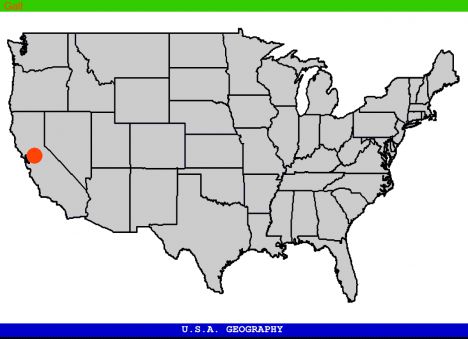
Sabu lived one year at PAWS. Sabu arrived a year ago PAWS, in Galt, northern California, and was euthanised there a week ago, 29 years old, officially because of severe arthritis. But 29 years is a very young age for an elephant to develop such a severe arthritis that he must be euthanised. 

PAWS wrote in their 2010 newsletter: Prince and Sabu, both retired performing elephants, are in good health so we expect them to be with us for a very long time. In this newsletter is also mentioned a very cool and rainy spring.


And Patricia Zerbini, owner of Two Tail Ranch in Willistone, Florida, where Sabu was housed by Ringling Brothers Barnum and Baileys Circus before his relocation to PAWS says: Sabu had no medical issues here, he was very sound and never showed any joint stiffness what so ever.

Sabu was here untill a year ago when he left to go to PAWS, He did belong and was here under the care of Ringling Bros. staff and veterinarians, but I saw him every day and in all the years he had been here I never saw any signs of arthritis, or other illness, he was a very healthy beautiful animal, the reason he was retired so young I was told is because he got too large to travel comfortably by train. I was here the day he was loaded and lended a hand with his loading, he in no way had any stiffness, soarness, or signs of problems with his joints, I would think that if he had any arthritis in him that would cause his collapse and death a year later he would have had to show some kind of signs while here at the ranch, I am not sure what happened to him while in the care of PAWS and I am sure we will never know but I do not in any way shape or form believe that arthritis was a factor in his death. Patricia Zerbini 2012-01-17

More elephants were euthanised at PAWS for the same reason, arthritis:
  • In April 2008, the 56 years old Asian female Winky (Winkie), arrived in August 2005.
  • In March  2005, the 39 years old Asian female Tinkerbelle, arrived in November 2004.
  • In September 2003, the 51 years old Asian female Tamara.
But nothing is mentioned about that Sabu suffered from Elephant TB (Mycobacterium tuberculosis).
At PAWS, Sabu joined Nicholas, PAWS' youngest bull elephant and half brother to Sabu, who arrived there in 2007 together with an Asian female Gypsie, from John Cuneos Hawthorn corporation. In January 2009, Gypsie was relocated to the other Asian females. PAWS writes on their website: Gypsy had provided security, safety and wisdom to him as long as she could. In the wild, he would be sent out to follow older bulls and learn the ritual that all elephants understand.We moved Gypsy down the hill to join the other Asian elephants where she's been given a much deserved rest and retirement after the daunting task of raising a young bull. Nicholas is now a neighbor to Prince and Sabu, PAWS two other bull elephants. (Source)

Which means that the Tuberculosis possibly was spread to previous kept elephants at PAWS.

The both bull elephants stables can be seen on this video:

Nicholas belonged to a group of Tuberculosis infected elephants from Hawthorn corporation in U.S.A. which needed to be translocated.  Most of the elephants were sent to two elephant sanctuaries In U.S.A.: The Elephant Sanctuary in Tennessee and Nicholas to  Performing Animal Welfare Society / ARK 2000 (PAWS).

The lengthy relocation effort began in March 2004 when APHIS settled a case with the Hawthorn Corporation for violating the Animal Welfare Act.  Under the terms of the consent decision and order, Hawthorn paid a $200,000 fine and agreed to donate the entire elephant herd to other facilities.  Although the decision was a regulatory accomplishment for AC, it quickly became a steep logistical challenge. Of the 18 elephants, 2 (Nic and Gypsy) went to the  PAWS facility, 1 went to an individual licensed exhibitor, 1 to the Endangered Ark Foundation, and 11 to the Elephant Sanctuary in Tennessee.  Unfortunately, four of the elephants covered under the order died prior to or shortly after being placed in their new homes. (Source)

People objected to the idea to mix TES elephants with documented Tuberculosis infected elephants. But the elephant sanctuary in Tennesee claimed they had a TB quarantene, and that the medical issues were monitured scientifically. Maybe they thought so, but it wa false...

A later report released by the U.S. Centers for Disease Control and Prevention says:
TB spread to eight employees, though three of them didn't work directly with the elephant, according to a report released Wednesday by the Centers for Disease Control and Prevention. The three worked in an administrative building next to an elephant barn at the refuge in Hohenwald, about 85 miles southwest of Nashville.
(Source)

Some elephant holdings, including PAWS Sanctuary, claim the have a TB protool and perform trunk washes. But trunk washes are extremely inacurate. In a TB outbreak in Sweden, five elephants were affected. Of 189 trunk wash samples collected, only 7 were positive from the 5 elephants that were confirmed (on postmortem) to be infected with TB (Moller 2005, Moller 2006, Lewerin 2005). Presently, the TB Rapid Test is the most accurate method to trace TB among captive elephants. Read more: Is the trunk wash an accurate diagnostic technique?Elephant tuberculosis FAQ by elephantcare.org
Sabu tested positive for TB (Tuberculosis) already in year 2000. Karl Cullen writes on his blog elephant dreaming: "Their three female Asians and one bull, Sabu, have all been exposed to the TB virus, which can be transferred elephant – human and vice versa, so when in contact with any of them we were required to wear face masks".

Peter Dickinson writes on his blog:
It is known that 'Sabu' had tested positive for TB in 2000 though there was no mention of this as a contributory factor in the death. In fact the TB has not been mentioned at all. This is both as odd as it is disturbing because it is a Animal Welfare Act regulation that 'all captive elephants in the US are periodically tested for TB...and that all of those having close contact are tested on an annual basis'.
So was 'Sabu' cured? Did he no longer have TB?

Were the councillors kept in the dark over the TB question? How open has this sanctuary been with its medical records? If it were an AZA approved collection (which it isn't) then these records would be available. It is to an approved AZA collection that the Toronto Zoo staff wanted to send the animals they loved and cared about. Now they have another nightmare of worry. (Link to the blog article) 

Pam Reid-Chevalier writes on Facebook:
The Animal and Plant Health Inspection Service is a U.S. govt regulating body that has specific legal requirements. According to page 21 of the APHIS manual on Guidelines for controlling TB in elephants PAWS was required by law to do TB testing before and after the euthanasia of Sabu:

"It is essential that a post-mortem examination be performed on all elephants that die. The examination must inc...lude a thorough search for lesions of tuberculosis regardless of exposure status. Prior to any planned euthanasia of an elephant, trunk washes, blood for serology and any other ancillary tests should be performed regardless of whether or not TB is suspected. In this way, valuable data can be gathered to evaluate the efficacy of the current testing protocol. In the event of a sudden death, collect post-mortem blood and separate serum for other tests. "

There has to be records somewhere so I think that PAWS should publicly release the results of these tests in order to answer the questions that have been raised concerning the TB status of its elephants.
 
Read more on U.S. Animal and Plant Health Inspection Service at Guidelines for the control of Tuberculosis in elephants

Animal rights activists main stream has claimed that Performing Animal Welfare Society / ARK 2000 (PAWS) is the only suitable place for the3 african elephants at Toronto Zoo in Canada. Thousands of people have signed petitions that Toronto elephants should be moved to PAWS, encouraged by, among other celebrities, Bob Parker. In the article  Bob Barker Visit Could Sway Vote On Sending Toronto Elephants To Sanctuary is written: A visit from Bob Barker may have been the final push needed to convince Toronto officials the city's three elephants should be sent to a sanctuary in a warmer climate.

Neither the retired game show host or the journalists at The Canadian Pres, or Zoocheck Canada, or Toronto City councillors Michelle Berardinetti and Shelley Carrol, who claimed that another winter in Toronto Zoo could kill the Toronto elephants, seems to have bothered to look on a map, looking up the longitudes for Galt, where PAWS is located, and Toronto. Galt, situated in NORTH California, is not really tropical...  For anyone, not just interested in signing petitions, it may be interesting to learn about how the Golf Stream affects east coast, with warmer water, due to the coriolis power... further reading may suggest find out why corals grown on east coasts, and less at west coastsand why upwellings are more common on west coasts. Now, african elephants are less sensitive to cold. It may be noted that North Americas most succesful breeding operation of Asian elephants, is in Cambridge, Canada, only some kilometers south-west of Toronto...

It is not known if PAWS are following the The AZA 40 degrees F rule. It seems like the elephants can choose as to stay inside or outside: "
Last Thursday, as Detroit's elephants snaked their way across the Plains States in a semi-trailer truck, Derby shuffled out every two hours in a nightlong rainstorm to check on the three Asian elephants that had refused to come into the barn that night. With a 10,000-candle power spotlight, she verified their whereabouts while often wallowing in a pond that night and returned for another fitful 120 minutes of sleep. "If they go down, you've got about two hours to get them up before they suffocate" under their own weight, she explained. Earlier this year an elephant did go down. Tinkerbell, who had only been at Ark 2000 for four months after her transfer from the San Francisco Zoo, collapsed and had to be euthanized. (source)


I have worked with arthitis elephants, and although elephants are intelligent, they didnt really seem to have an intellectual attitude, as to understand what components may affect their arthritis legs.

I am highly sceptical, that any professinal manager would conifirm, that this sounds like a responsible way of keeping tropical animals. PAWS claim that they have an "elephant jacuzzi" and other therapy methods for arthritis elephants, but the text above gives an indication that in spite of expensive investments, allt this technique can not compensate lacking common sense. If this location would have been in Florida, the situation would have been different. But its northern California...

An article written three years ago says: Nicholas, PAWS Asian bull elephant, walked outside for a few moments, but he obviously preferred a heated floor and very warm water for drinking to the beautiful, but frigid conditions in his outdoor habitat. (Follow this Source and read about the snow falls in NORTHERN California)

Last year the snowfall was 2 feet deep in Galt. 
[EDIT: maybe this is wrong, maybe the snowfall was not two feet deep. I dont think it really matters for elephants how deep the snow is, what matters, is they shouldnt walk free in and out, on their own wish, under such circumstances.]


I have no reason to accuse PAWS for anything, and I realize that they are eager to take as many new elephants as possible to get more fundings. What I can not understand i why PAWS suddenly became the only appropriate place to relocate Toronto Zoos elephants to? And why not AZA member locations can not even be considered? This blog article is not a critic against PAWS, who for sure have to compete with other institutions, in order to get funds, so they can develop and buy even more land.


Its critical against people, who by political manipulation, stop to think themselves, and just keeps signing petitions, or taking council decisions, although thay lack most knowledge and background information needed, to engage in issues like where elephants should be located. 

Is it logical to only see a TB infected location holder, pretty up north in west coast north America, as the single only place where Torontos elephants should live, just because a retired showman want to pay the transport of the elephants, if they come there.


Is it because its called a Sanctuary? (Sanctuary = good, Zoo =bad?)

But can the defenition Sanctuary really be applied to a location holding with infected animals, carrying a chronic, lethal disease? Regardless of if they claim they have a TB quarantene? Is there, scientifically, an existing TB quarantene at PAWS and TES? It was claimed so before, but the present board of TES also alleges that the previous directors failed to implement infection control measures, which the sanctuary and regulators agreed to, that preceded several elephant caregivers' testing positive for tuberculosis. (Source from a blog, The Teneseean has, for some reason, removed the article from their online archive)

And should the elephant stables really be aplayground for children and youths?


 JULY 29, 2012: Le PeTiT CiRqUe'S HUMANITARIAN cirque company of kids visited the Performing Animal Welfare Society's Incredible 23,000 sq.ft sanctuary and learned about the incredible animals they are performing for at the AVALON THEATRE on Sept-30. Since all of our productions are humanitarian based, the youths learned about these animals and where they were rescued from

Did the youths and their parents also learned about the lethal zoonosis infection elephants from those stables are carrying?

As far as I can understand, a place with infected Tuberculosis animals, can not be defined as a sanctuary, since its not a safe place for healthy elephants. And Florida may actually be much warmer for the Toronto elephants...


Still PAWS directors does not understand why AZA want to send the elephants to warmer Florida, and they write on their website:
Some of the most renowned and respected scientists — Cynthia Moss, Joyce Poole, Winnie Kiiru, Keith Lindsay and Dr. Jane Goodall — have recommended the PAWS ARK 2000 sanctuary to Toronto Zoo as a retirement home for the three African elephants, Thika, Toka and Iringa. Why does AZA consider their years of experience as unimportant, and continue to threaten Toronto Zoo with the horrors of lack of accreditation? (Source)

So whats more important, the future health of the Toronto elephants, or the thousands of petition signers on Internet? Should decisions be made by experts, or by politicians, dependant on, and manipulated by, propaganda?

And who are experts by the way? 

And if the above mentioned "experts" really think its better to move healthy elephants to a Tuberculosis infected "sanctaury" on the somewhat colder north california coast,   rather than to a TB free AZA credited location in Florida, well we might ask ourselves, are really Cynthia Moss, Joyce Poole, Winnie Kiiru, Keith Lindsay and Dr. Jane Goodall that stupid, or is it possible their names were used by the welfare people according to the new "noble cause corruption" mentality?

Maybe, just maybe, Cynthia Moss, Joyce Poole, Winnie Kiiru, Keith Lindsay and Dr. Jane Goodall doesnt really think that healthy elephants should be infected with Tuberculosis?

You may actually ask them, because, they signed papers in order to convince us hat experts had analyzed the destiny of the healthy Toronto elephants, and the only place they recommend was a private location with Tuberculosis infected elephants, pretty much north in California.
 -Although Florida is warmer...

How odd it may sound, this was their decision. Or was it? Ask them!  

[EDIT]
2013-03-11: USDA to Consider Guidelines for the Control of Tuberculosis in Elephants
WASHINGTON, Dec. 28, 2012--The U.S. Department of Agriculture’s (USDA) Animal and Plant Health Inspection Service (APHIS) is taking public comments on the Agency’s intention to use the 2010 “Guidelines for the Control of Tuberculosis in Elephants,” issued by the United States Animal Health Association (USAHA), to assess whether or not USDA licensees are adhering to the Animal Welfare Act (AWA) regulations and providing their elephants with adequate veterinary care with respect to tuberculosis (TB), TB testing and elephant movement

Link: read more 

Links:  


Monday, January 9, 2012

Circus elephants in Chile and Vietnam transfered from circus to Zoos

Almost in the same day, two circus elephants, in Chile and in Vietnam, were transfered to new locations.

In Chile, a few days ago, the Ecopolis campaigne Liberen A Ramba - Free Ramba (also on Facebook: LIBEREN A RAMBA EL ULTIMO ELEFANTE DE CIRCO EN CHILE) the elephant Ramba was confiscated from Circo Los Tachuelas in Chile and relocated to Rancagua Safari Park (Parque Safari de Rancagua) where she arrived to a newly designed one hectar facility, and an air-conditioned stable.


In Vietnam, there has been concearn about the elephant Ny, located at Saigon Circus, for some years.

Annie Eagleton wrote an article about Ny, Project to return circus elephant to the bush in March 2011.


Ny and another elephant was a gift from Sony Korea to the Ho Chi Min City, who gave the two elephants to the Saigon Circus. 

The second elephants where abouts is unknown, and Ny stayed on Saigon Circus as a single elephant, most of the time kept on an extremely short chain, which restricted her movements to a minimum.
 

Notice the plastic pipes through her ears
Last night she arrived in Saigon Zoo, which had another 5 elephants during my visit there in January, including a mature bull. And since I am now in Saigon, I will go to see her tomorrow.

Friday, January 6, 2012

Can Sambo and other elephants transmit tuberculosis to people?

Foreign tourist hand feeding Sambo (Phnom Penh Post)
What the article about Sambo in the Phnom Penh Post about Sambo in the Phnom Penh Post doesnt discuss, is the risk of people transmitting bacterial TB to Sambo, and Sambo transmitting TB to people.

Does Sambo have Tuberculosis? None knows.

She was never tested, we dont know if her owner Sin Sorn, his family, or his nephew working as Sambos mahout was tested. But statistically, she most likely was heavily exposed to Tuberculosis, and she and all humans in daily close interaction, should be  checked ASAP.

Recently, 17th of December, she was used at christmas mascot at a christmas event in Phnom Penh, called Santa Elephant Parade:.

People will gather at the Kids Park at Wat Phnom at 7:45am. At 8am, Santa will arrive on his elephant and the parade will begin. The parade will be led by 20 children from The Future Light Organisation, which runs an orphanage for more than 280 orphans which aims to help them the skills necessary to lift themselves out of poverty towards a brighter future At the end of the parade, Santa will be handing out gifts to all the children whilst people on the parade can help feed Sombo a well deserved healthy meal. The event, organised by Monument Books and Toys, is part of their regular calendar of children’s events and activities, which has included, face painting, magic shows, storytelling and origami.

Did anyone catch Tuberculosis from Sombo as christmas present? We dont know...


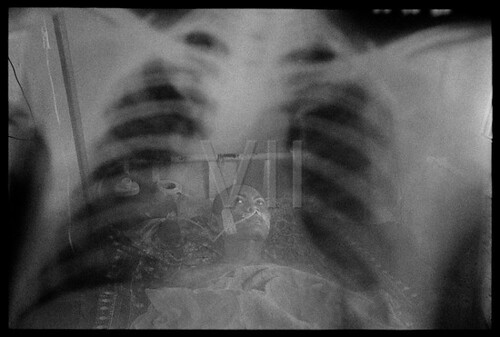
Pulmonary Tuberculosis is a medical problem which is a sleeping bomb in regards to captive elephants in Asia. TB is airborne and spreads through tiny droplets in the air. Besides people and elephants, tuberculosis also affects primates, cattle, horses and other animals.

It is thought that among Asias captive elephants, 5-25% suffer from Tuberculosis. Many of those elephants are kept in forest camps and have minor interaction with other humans than their mahout. But 40% elephants in some temples in India are reported to have Tuberculosis. Why?
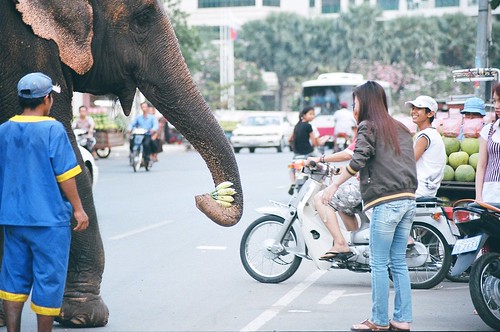
Asias forest camps are completely different to the case with the elephants in urban environment, being handfed from hundred of people every day, like the single elephant Sambo in Phnom Penh, who have been standing as a monument outside Wat Phnom temple since 1992, and the hour walk home along the Riverside.
Through the banana hand feeding, or just checking people up, if the have food in their hands, Sambo has been exposed to hundred of thousands of people, 64% of them having TB...


Sambo handfed from staff at a restuarant in Phnom Penh
And during the begging, also fruits at the shops may have been infected, and sold to people,

Actually, during the 1,5 hours daily walk home, Sambo has been handfed by restaurant staff at the most populair resturants along the Ton Le Sap.

Maybe, maybe, very much maybe the waitors washed their hands afterwards??

But not their lungs...

Some minutes later they served a tourist a meal..

Cambodia ranks 21st on the list of 22 high-burden tuberculosis (TB) countries in the world. An estimated 64 percent of Cambodians are infected with TB, and a substantial number of cases remain undetected. As of 2007, around 13,000 Cambodians have died annually from the disease. There were almost 71,000 new TB cases in Cambodia in 2006, with an estimated incidence rate of 495 cases per 100,000 population


It seems also like the TB goes through a mutation in elephants, before being passed back to humans.
Alarmingly, 4.3 percent of new human TB cases worldwide are now multi-drug resistant (MDR TB) (Shah 2007).  More than 50 percent of drug resistant TB cases are fatal, even when treatment is administered (American Lung Association 2007). The incidence of XDR TB is increasing. In the initial reported outbreak of XDR TB, 52 of 53 patients died within three weeks (WHO 2006).


Between 1994 and 2006, there have been 36 culture-confirmed cases of tuberculosis in U.S. elephants, most of them asian elephants. Among all US elephants, ≈12% of Asian and ≈2% of African elephants are thought to be infected with M. tuberculosis (Source 1,2).

Looking on this picture, seing the person protecting himself with a mask, may rise the question, when did you last time read a sign in an asian elephant sanctuary or camp, "We are TB-free!".


Many foreign tourists, especially western females visiting elephant camps and sanctuaries in Asia, tend to try to have as mouch body contact with the elephants as possible. (And some 5-10% with the mahouts as well...) This includes hand feeding, and close contact, when the elephants normally check the tourist up with their trunks, looking for food, or just checking the breath and smell of the human elephant lovers. And theres a lot of kissing, and excited laughs, and Oh-My-Gooods etc...


Its impossible to hand feed an elephant without facing the risk of Tuberculosis transfer in Asia.


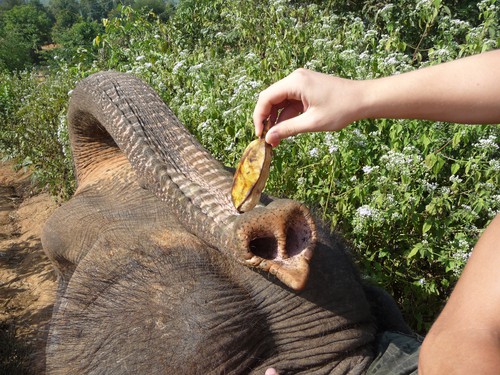
When the elephant takes your gift, you get exposed to saliva from the trunk, and air from its lungs.
A second later, the fruit is gently placed on the elephants toungue, with the trunk.

And then trunk moves to the tourist again, for next fruit.

Would you step into a hospital in Asia, and kiss the patents?


Caption: An elephant moves in for a slobbery kiss. Source:

When you and your children spend a week in an elephant sanctuary, did you check if they are TB testing their elephants and their mahouts?

Did you test yourself later? Or your children?

Furthermore; when Asian countries start to demand TB checkup on captive elephants in camps and sanctuaries, and eventually promting them to establish quarantine, and stopping human visitors and interactions, how many will continue to "save" and "rescue" elephants, when no dollars are coming in from the tourists? 

And how can the camps be trusted, unless they publish veterinary reports, issued by officials?
One example is one of Thailands most visited camps, "The Elephant Nature Park", owned by Mrs Lek Sailert in Chiang Mai, and marketed as a "sanctuary", which has had a turnover of more than 70 elephants through the years. This place even sell elephant kissing, to well paying tourists.

How is the TB situation at Thailands most visited elephant camp, where you can even get a kiss from an elephant if you pay well? -The answer is, you can not find out what risks visitors to <em>The Elephant Nature Park</em> take, when they interact with the elephants. Does anyone else, apart from Mrs Sangduen Chailert, and , believe its enough to "isolate" an elephant, if its postive for Tuberculosis, in a place with a +70 elephants turnover throughout the years, 16 deaths with no public autopsy reports, and apr 100 international visitors daily, included children? ENP has a very intensive physical contact between humans and elephants, including a special kiss-an-elephant event? Read Lek Chailerts statement, where she writes: "We open our park to university and international veterinarians and the government to regularly test our elephants for TB.".

BUT! Thailand’s most well-known specialists on TB, a scientist from Chiang Mai University, wrote me 20th of May 2013:  “They used to ask me the possibility to do the test, but after that I have heard nothing.” Lek Chailert writes: "Tuberculosis is a concern at our park, however none of our elephants has the disease" WHERE is public documentation from Thai official veterinaries that confirm that NOONE of the 70 elephants carried TB?

Sambo hand fed at Wat Phnom
Some links discussing Tuberculosis and its transmits between elephants and humans:  
Sambo being handfed.

What’s Sambo’s future? (Article in Phnom Penh Post)


What’s Sambo’s future? 

Today the Phnom Penh Post have an article about Sambos future, written by Ou Mom.

Hopefully, this article will widen the debate, and make more people realize, that this elephants really is badly suffering, and need acute competent medical care, something her present owner, Mr Sin Sorn, will never be able to supply. And this puts more responsibility on the Forestry Administration of Cambodia, who have to step in and take resonsibility for the animal, since her owner is neglecting her health.

What the article about Sambo in the Phnom Penh Post doesnt discuss, is the risk of people transmitting bacterial TB to Sambo, and Sambo transmitting TB to people. (my next blog post...)

Read the Phnom Penh Post article:

What’s Sambo’s future?

Thursday, January 5, 2012

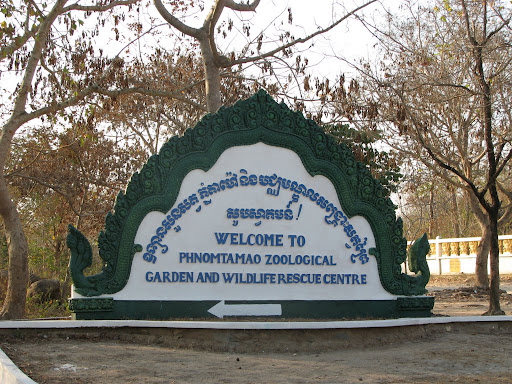
Phnom Tamao Zoo and Wildlife Rescue Center, Cambodia


Before leaving Cambodia, I was called by the Phnom Penh Post, and asked questions about the elephant Sambo at Wat Phnom in Phnom Penh. The article is written in Khmer, (សម្បូណ៌​ត្រៀម​ទទួល​ការ​ព្យាបាល) so I havnt been able to read it, the english is said to apprear on friday. In my answers I focused on the owners limited knowledge and recources, and that Sambo must be relocated to Phnom Tamao ASAP.


In February 2011 I visited Phnom Tamao Zoo (founded in 1995), situated less than an hour away from the capital of Phnom Penh, and learned that this is by far, more than zoo, the Phnom Tamao Wildlife Rescue Center is also home to over 1,200 animals rescued from the illegal wildlife trade. Since 2001, Wildlife Alliance has rescued more than 43,000 animals from poachers and illegal wildlife traders, and has dramatically driven down the buying and selling of wildlife in Cambodia and throughout Southeast Asia.

In 1998 and 1999 the female elephants Lucky and Narang arrived. Photo: Gavin Bourchier, Sept 2000

The elephant stables with a fairly modern setup

Good shade in the boxes
and several out enclosures

Around 1999, six calf elephants were captured, ranging in age from 6 months to five years old, according to Mondulkiri provincial DFW sources. One particular young elephant that avoided the hunters was brought to the WPO Wildlife Rescue Center in Phnom Penh. During a hunt, the mother of this individual was killed, and the young animal ran into a village. It was caught in a villager's kitchen searching for food. The villagers negotiated with the DFW as they did not wish to raise the elephant. In the end, an undisclosed sum of money was paid to bring the young animal to the Wildlife Rescue Center. 

This young animal unfortunately died on 5 April 2001 because of an infection following an accident that resulted in a number of broken bones.

Source:  The status, distribution and management of the domesticated Asian elephant in Cambodia by Chheang Dany, Hunter Weiler, Kuy Tong and Sam Han


 In 2002, Phnom Tamao Zoo had the first confirmed fatal case of EEHV (Elephant endotheliotropic herpes virus) in Asia: The deceased elephant (“Seima”) was approximately three years old, wild-born [in Cambodia]. She was confiscated from traders in 2002 as an approximately 6 months old calf and placed in Phnomn Tamao Wildlife Rescue Center where she was bottle-reared by keepers and housed with 4 other elephants…. She died in lateral recumbency on May 6, 2004 without observed symptoms and without any treatment. Reid, et al., Veterinary Quarterly 2006; 28(2), p. 63, under Case report/Disease History

 See also: Endotheliotropic Elephant Herpes Virus (EEHV) infection. The first PCR‐confirmed fatal case in Asia


In 2007, 138 captive wild animals was recued from neglect and deplorable conditions at the Angkor Zoo in Siem Reap, Cambodia. The government cracked down and closed the Angkor Zoo, and some of the animals were brought to Phnom Tamao.

Presently, 5 elephants are housed at Phnom Tamao Zoo (database)

Returning to the stables after a walk and swin in the lake.


During my visit the elephants were taken for walk outside the enclosure, and getting a bath in the nearby lake.
Chhouk

In March 2007, there were reports of a lone, orphaned baby elephant wandering through the forest in Mondulkiri, with his front left foot severely injured and infected, as a result of hunter snares.

Chhouk was transported 26 hours on the back of a truck to Phnom Tamao, where his treatment began, Nearly 5 inches of infected tissue and bone had to be removed, and he was fitted with his first prosthetic foot in 2009. He is now waering his fourth artificial foot.


Chhouk's
Prosthesis, which was made by the Cambodian School of Prosthesis and Orhtotics (CSPO), with funding assistance from SeaWorld & Busch Gardens Conservation Fund, for a cost of US$30,000
 
Some Youtube videos:


Read more: